Sri Lanka's Entertainment Scene Is Exploding — The Stars Rising, the Feuds Brewing and the Shows You Cannot Miss
Something is genuinely happening in Sri Lanka's entertainment landscape, and if you are not paying attention, you are going to miss it entirely.
The local film industry has quietly — and then suddenly, loudly — been building momentum that is finally translating into real mainstream cultural clout. Sri Lankan cinema is reaching new audiences through streaming platforms, with films that blend authentic local storytelling with production values that can hold their own across the region. The conversation has shifted. It is no longer about survival. It is about ambition, and about the kind of ambition that has teeth.
On the small screen, the teledrama industry continues its iron grip on primetime viewing. The serials running on Sri Lanka's major channels command audiences that many international streaming services would genuinely envy. But behind the scenes, insiders describe an industry in real flux — one where traditional formats are being challenged by younger audiences who consume content differently, on phones and tablets, on YouTube and TikTok, in short bursts rather than hour-long evening slots.
The faces driving that shift are younger, more diverse, and more social media-savvy than the stars who came before them. A new generation of Sri Lankan content creators — many of whom built entire audiences online from scratch — are crossing over into mainstream entertainment, bringing loyal fan bases with them and rewriting the rules about what fame means and how it is built.
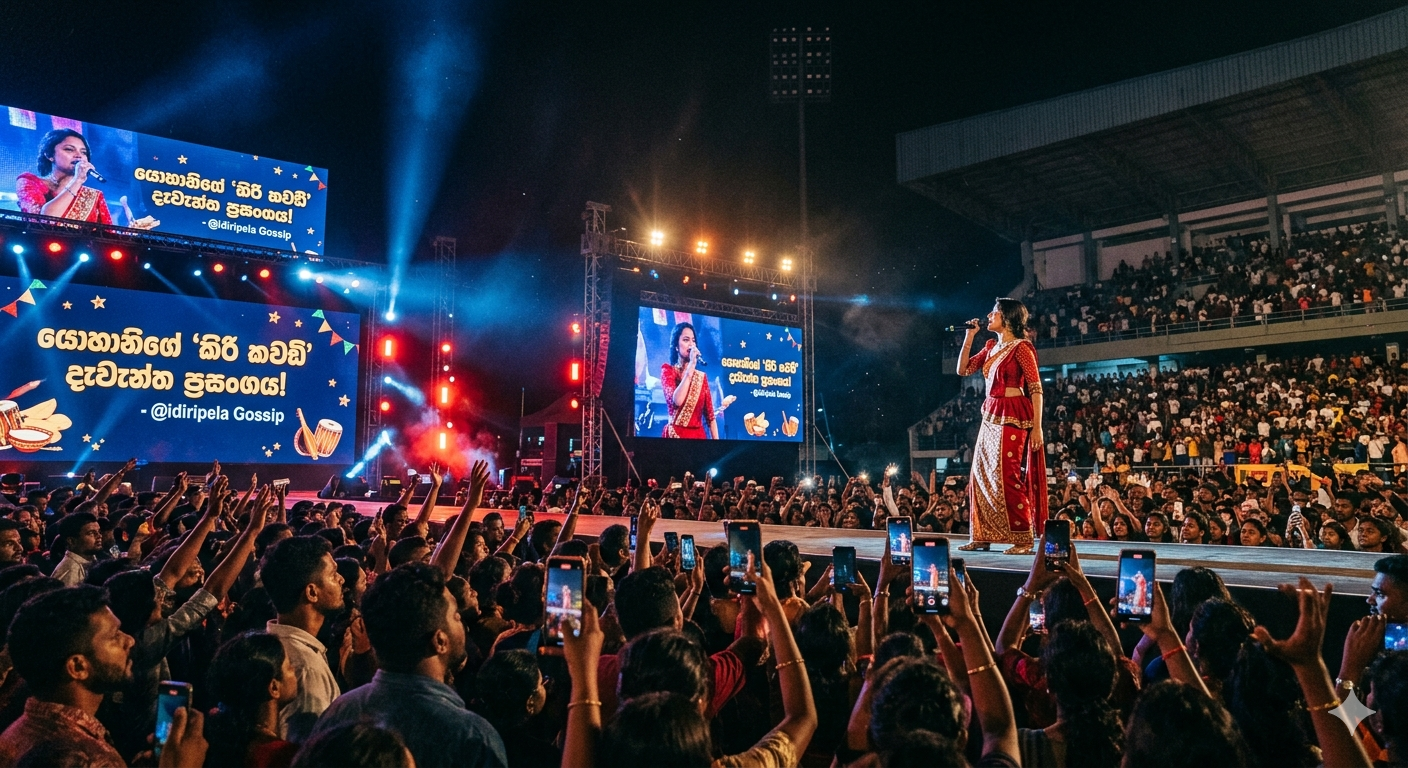
The music scene tells a parallel story. Sri Lankan artists are increasingly releasing bilingual work — Sinhala and English — with production quality that reflects serious investment and international ambition. Collaborations with producers and artists from India, the United Kingdom, and beyond are becoming more common, and the viral moment for a Sri Lankan song is no longer a fantasy. It is a realistic, actively pursued target.
Not all of this growth is without friction. Disputes over royalties, accusations of plagiarism between artists, and tensions between established industry gatekeepers and digital-native newcomers are simmering beneath the surface. The question of who controls the narrative — and who profits when the audience grows — is one that Sri Lanka's entertainment world will need to answer clearly as the stakes get higher.
What is beyond dispute is that this is a moment of genuine, palpable energy. The talent was always here. The infrastructure is finally catching up. The audience — both locally and among the vast Sri Lankan diaspora — is hungry for content that reflects their lives, their humour, their identity, and their complexity.
Sri Lanka's entertainment scene is no longer the quiet, local affair it once appeared to be. The spotlight is growing brighter. And more people, day by day, are stepping boldly into it.
Related Gossip